Boho living rooms have a reputation problem. Done poorly, they slide into cluttered — too many plants, too many textures, too many small objects competing for attention. Done well, boho is one of the most inviting styles there is: warm, textural, layered, and genuinely comfortable to sit in for hours. The difference almost always comes down to editing.
Start With a Grounding Sofa
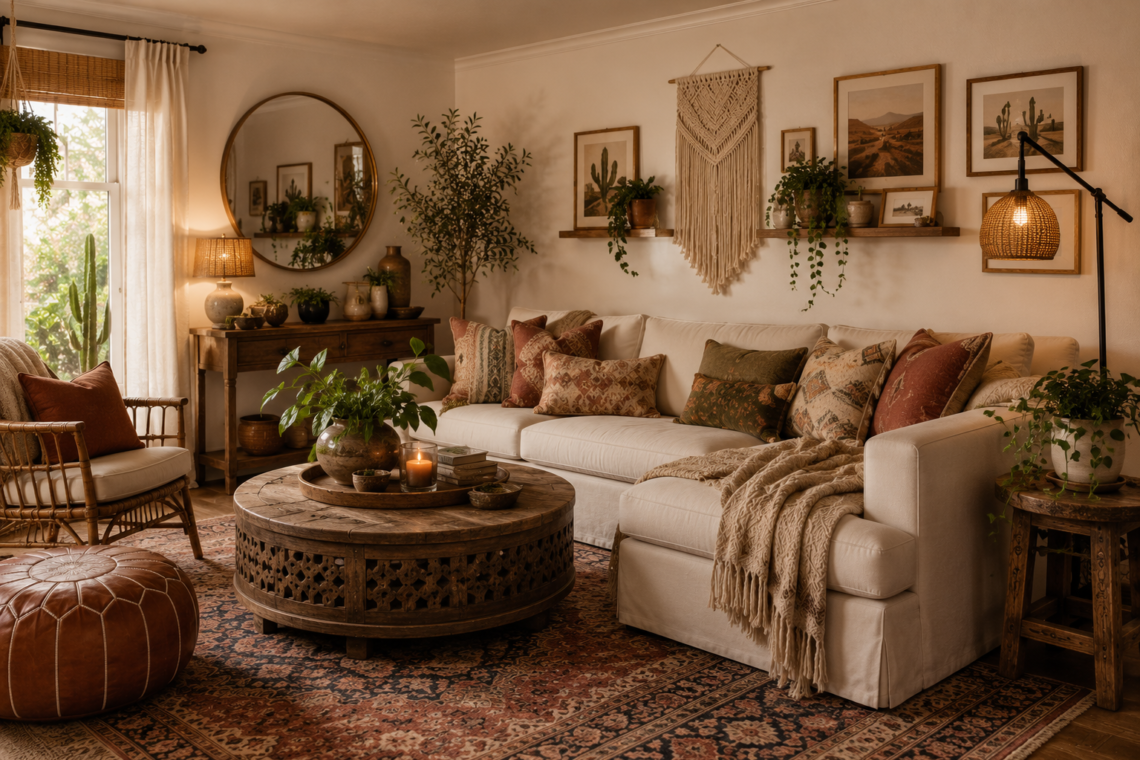
Boho works best when your biggest piece of furniture is the calmest one in the room. A low-profile sofa in a warm neutral — rust, cream, olive, or terracotta — gives you a stable base to layer everything else on top of. Save the bold pattern for pillows and throws, not the whole couch.
Choose a Coffee Table With Texture
Rattan, reclaimed wood, or a low carved table all add the tactile quality boho rooms depend on. A glass or heavily lacquered coffee table will feel out of place here — you want something that looks like it has a little weight and history to it.
Layer, Don’t Stack, Your Rugs
The layered-rug look — a jute or sisal base with a smaller patterned rug on top — is a signature boho move, and it works because it adds texture without adding visual noise the way patterned wallpaper or a busy accent wall would. Keep the top rug’s pattern in a similar color family to the rest of the room so it reads as intentional rather than random.
Bring in Natural Materials Everywhere You Can
Rattan side tables, wood bowls, woven baskets, and linen textiles are the backbone of the style. If a piece is plastic, glossy, or sharply geometric, it’s probably fighting the look rather than supporting it.
Lighting Should Feel Warm and a Little Imperfect
A woven rattan pendant, a ceramic table lamp, or a floor lamp with a linen shade all add the soft, golden-hour glow boho rooms rely on. Avoid anything with a sharp, cool-white LED — it undercuts the warmth immediately.
Plants Are Not Optional, But They Are Editable
A boho living room without any greenery feels unfinished. That said, you don’t need ten plants — two or three well-placed ones, varied in height, do more than a dozen crowded onto a single shelf. A tall floor plant in a woven basket planter, paired with a smaller trailing plant on a shelf, covers most of what the room needs.
Wall Decor: Woven Over Framed
Macrame hangings, woven wall art, and natural-fiber tapestries fit the style more naturally than traditional framed art. If you do want framed pieces, look for warm-toned botanical prints or abstract art in earthy colors rather than anything glossy or high-contrast.
Side Tables and Storage
Nesting rattan tables give you flexible surface space without adding visual bulk. For storage, a woven basket or two tucked beside the sofa handles blankets and everyday clutter while still fitting the aesthetic — much better than a modern storage ottoman in a slick fabric.
Where to Show Restraint
The most common boho mistake is treating every surface as an opportunity for another object. Pick a few key textures — rattan, linen, a warm wood tone — and repeat them intentionally instead of introducing a new material with every new piece. A room that repeats its materials looks curated. A room that never repeats anything looks like a garage sale.
Budget-Friendly Building Blocks
Rattan and woven pieces are some of the more affordable materials in home decor, which makes boho a relatively accessible style to build. Thrifted baskets, a secondhand rattan mirror, or an affordable jute rug can cover a large portion of the look without a big spend.
Where It’s Worth Spending More
Your sofa is the piece to invest in. A well-made frame in a good neutral fabric will anchor the room for years, long after trend-driven accessories have been swapped out or replaced.
The Collected-Not-Cluttered Test
Before adding a new piece, ask whether it repeats a material or color already in the room, or whether it’s introducing something entirely new. Rooms that repeat feel collected. Rooms that constantly introduce new elements feel cluttered — even if every individual piece is beautiful on its own.