Scalloped edges are back in a real way — on mirrors, cabinetry, lamp bases, table skirts, even headboards. It’s an easy trend to love and an even easier one to overdo. Used with restraint, scalloping adds softness and a little playfulness to a room. Used everywhere at once, it can tip a space from “charming” into “children’s tea party.”
Here’s how to bring the scalloped trend into your home in a way that reads as intentional and grown-up, not sugary.
Where Scalloping Works Best
The trend shows up most successfully on edges and trims — the rim of a mirror, the hem of a lampshade, the front edge of a cabinet door, or the skirt of an upholstered bed. These are places where the shape reads as a detail rather than the whole point of the piece.
Furniture Edges
A scalloped-front dresser or nightstand adds movement to an otherwise simple silhouette. The trick is picking a piece where the scallop is subtle — a gentle wave rather than a deep, cartoonish curve — and letting the rest of the piece stay clean and unfussy.
Mirrors
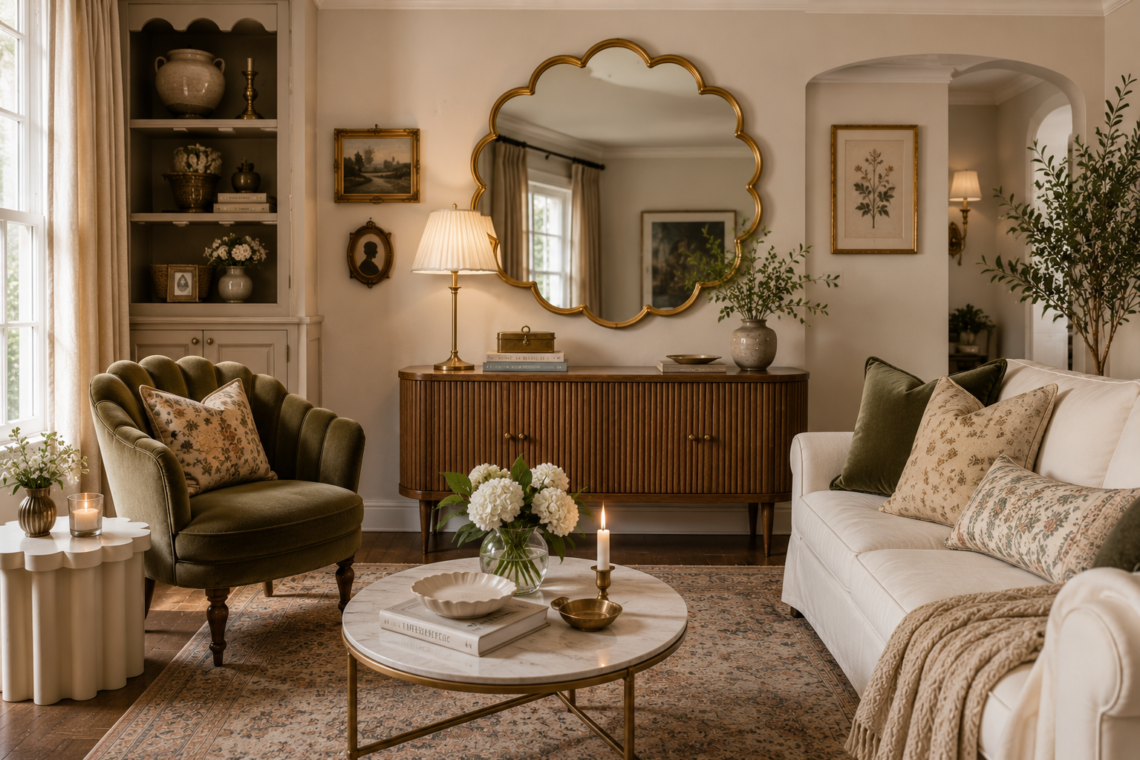
A scalloped mirror frame is one of the easiest ways to bring in the trend without committing to furniture. Choose one in a warm metal finish — brass, aged gold, or bronze — rather than a painted or pastel frame, which tends to push the look younger than intended.
Lamp Bases and Shades
A scalloped lamp base in ceramic or a scalloped-hem shade is a low-commitment way to test the trend. It’s also one of the easiest to swap out later if your taste shifts.
Tables
A scalloped-edge side table or coffee table apron adds softness to a room full of straight lines. Stick to one scalloped table per room — layering two competing curved pieces tends to look busy rather than cohesive.
Textiles
Scalloped-hem throw pillows, table runners, or curtain trims bring in the shape without any real commitment. This is the lowest-risk, lowest-cost way to try the trend before investing in furniture.
Cabinetry and Built-Ins
In kitchens and bathrooms, a scalloped valance above open shelving or a scalloped skirt beneath a sink adds a vintage touch without altering the actual cabinetry. It’s a detail more than a renovation.
How to Keep It From Looking Too Sweet
The trend tips into overly precious territory fastest when it’s paired with pastel colors, excessive florals, and multiple scalloped pieces in the same sightline. Ground it instead with warm neutrals, black or brass accents, and one strong scalloped piece per room rather than three competing ones.
Mixing Scalloped Pieces With Modern Furniture
A scalloped mirror above a straight-lined modern console, or a scalloped lamp on an otherwise minimalist nightstand, is the easiest formula for making this trend feel current rather than nostalgic. The contrast between the curved detail and the clean surrounding pieces is what keeps it from reading as costume-y.
Budget-Friendly Ways In
Textiles and small accessories — a scalloped tray, a throw pillow, a lampshade — let you test the trend for very little money before deciding whether to commit to furniture.
Where It’s Worth the Investment
If you love the look and want it to last, a well-made scalloped mirror or a solid-wood scalloped dresser will hold up far better than a trend-driven laminate piece, and the shape itself is classic enough to outlive the current wave of popularity.
The Restrained Version Wins
Scalloping works best as a detail, not a theme. Pick one or two places for it to show up in a room, keep your color palette grounded, and let the curve be a quiet accent rather than the loudest thing in the space.