This post contains affiliate links. As an Amazon Associate, I earn from qualifying purchases at no extra cost to you.
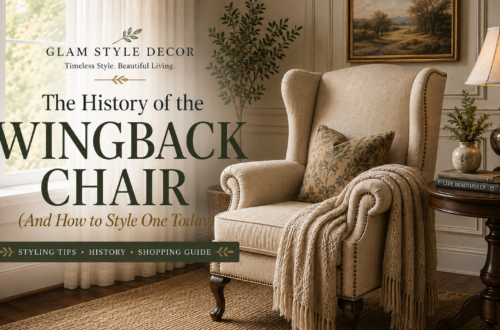
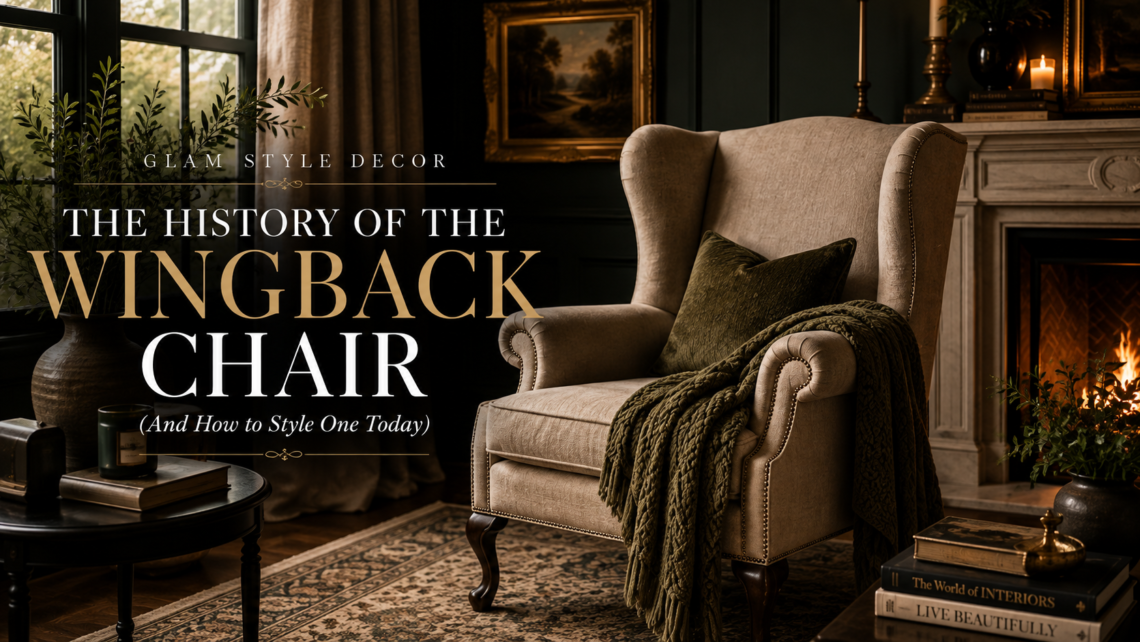
If you’ve ever seen a chair with tall, upholstered “ears” flanking the back and wondered what it’s called or where it came from — you’re looking at a wingback. It’s one of the most recognizable silhouettes in furniture, and one of the most misunderstood.
Where It Actually Comes From
The wingback wasn’t originally designed to look elegant — it was designed to work. Those tall side panels (“wings”) existed to block drafts and trap heat close to the person sitting in the chair, back when open fireplaces were the only real source of warmth in a room. Function came first. The style we associate with it today grew out of that original, practical shape.
How It’s Evolved
The wingback first emerged in late 17th-century England, born out of a practical need to block drafts near an open fireplace. By the 18th century, especially through the Queen Anne and Chippendale periods, the design had become more refined — tall, formal, often heavily tufted or richly upholstered — a statement piece meant to be seen, usually positioned near a fireplace or in a formal sitting room. Shop a traditional nailhead-trim wingback in mustard →
Today’s wingback has loosened up considerably. You’ll see low-profile, modern interpretations with cleaner lines and less ornate detailing, right alongside faithful traditional reproductions. The “wings” themselves have gotten smaller and more subtle in a lot of contemporary designs — a nod to the shape without the full formal presence of the original. Shop a softer modern wingback with retro wood legs →
Styling It in a Real Home
Fabric or leather? A fabric wingback — especially in a textured weave or a soft velvet — leans warmer and more traditional. Leather brings the same silhouette into more modern or masculine-leaning spaces without losing the shape’s classic bones. Shop a mid-century faux leather wingback →
Wood or metal legs? Traditional wingbacks almost always sit on wood legs, often turned or slightly tapered. If you want to modernize the look without losing the wingback shape entirely, a black metal leg is a clean way to do it — same silhouette, noticeably more current.
Nailhead trim — yes or no? This is purely a style choice, not a structural one. Nailhead studs along the arms or wing edges push the chair toward a more traditional, tailored look. Skip them for a softer, more relaxed feel. If you’re reupholstering or refreshing an existing piece rather than buying new, nailhead trim tacks are an easy, affordable way to add that detail yourself →
Best Wingback Chairs by Style
A quick note before you shop: I checked whether any of these exact chairs are sold at more than one retailer. Christopher Knight Home and HULALA HOME both sell different named models at different retailers rather than the same chair everywhere, so each recommendation below lists the retailer where that specific chair actually is, honestly, rather than forcing a price comparison that doesn’t exist.
Best Traditional Wingback — HULALA HOME’s blue wingback with retro wood legs keeps the classic tall silhouette and traditional fabric styling. Available on Amazon →
Best Modern Wingback — Christopher Knight Home’s linen wingback with solid ash wood legs and nailhead trim leans cleaner and more current while still keeping the shape’s classic bones. Available on Amazon →. Christopher Knight Home also sells a separate, budget-positioned wood-frame wingback directly through Home Depot — a genuinely different model, not the same chair at a different price. See it on Home Depot →
Best Faux Leather Wingback — DREAMSIDEA’s PU leather wingback brings the shape into more modern or masculine-leaning spaces, with nailhead trim and wood legs keeping it from feeling too contemporary. Available on Amazon →
Best Floral or Statement Wingback — HULALA HOME’s mustard wingback with a full floral pattern and nailhead trim is the pick if you want the chair to genuinely be the room’s focal point, not just an accent. Available on Amazon →
Best Budget Wingback — Christopher Knight Home’s wood-frame wingback club chair, sold directly through Home Depot, is positioned specifically as an affordable entry point into the style. See it on Home Depot →
Note: prices and availability were checked in August 2026 and may change. Confirm current pricing directly on the retailer’s page before purchasing.
Where It Actually Works
A single wingback as an accent chair — paired with a sofa in a different fabric — is one of the easiest ways to add visual interest to a living room without redesigning the whole space. It also works beautifully as a reading corner piece, especially near a window or a floor lamp, which is a nice modern echo of its original fireside purpose.
Whether you go traditional and tufted or lean into a slim modern version, the wingback earns its place in a room by doing exactly what it’s always done — giving you a chair that feels a little more considered than a standard accent piece.