The homes that feel the most collected rarely got that way on purpose, at least not all at once. That worn leather trunk doing duty as a coffee table, the mismatched dining chairs that somehow work together, the grandmother’s lamp next to a modern sofa — none of it was planned in a single trip. It built up over time, and that’s exactly what makes it feel real instead of styled.
You can shortcut that process without faking it. Here’s how to bring a collected, vintage-cottage warmth into your home without pulling everything off the walls and starting over.
Start With What You Already Own
Before buying anything new, walk through your home and pull aside pieces with some age, texture, or character to them — even if they’re currently scattered across different rooms. A brass lamp from the guest room, a ceramic pitcher from the kitchen counter, an old wooden stool. Grouping what you already have is the fastest way to see how much of this look you can build for free.
Mix One New Piece With One Old One
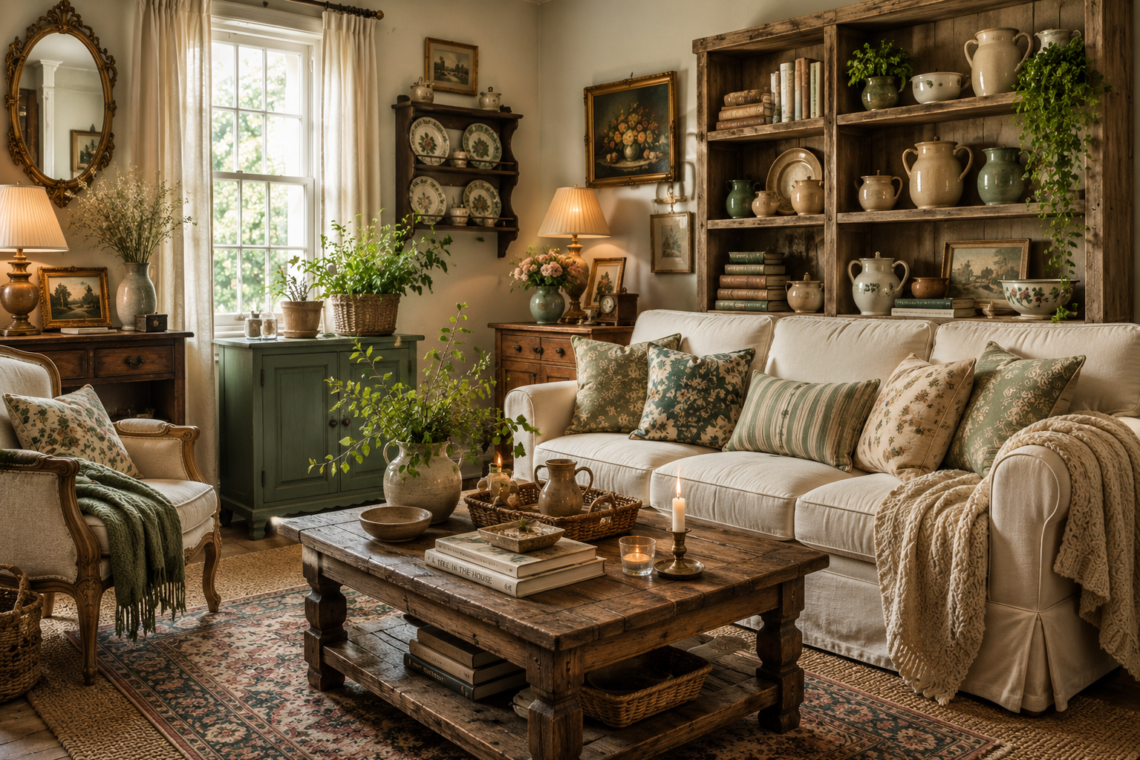
The collected-cottage look depends on contrast, not matching. If you’re buying a new sofa, pair it with a vintage or vintage-style coffee table instead of a matching set. If you’re adding a new dining table, mix in a couple of older or mismatched chairs rather than a full uniform set. This single habit does more to create that “gathered over years” feeling than almost anything else on this list.
Layer Textiles Generously
Cottage warmth lives in soft layers — a knit throw over the arm of a chair, a faded quilt at the foot of the bed, linen curtains that pool slightly at the floor. Don’t be afraid to mix patterns here: a small floral with a subtle stripe, or a solid linen with a worn Persian-style rug. The key is keeping the color family cohesive even when the patterns vary.
Choose Furniture With Some Curve or Age to It
Sharp, boxy modern furniture fights this aesthetic. Look instead for turned legs, slightly worn finishes, caned or rattan details, and rounded silhouettes. A single curved accent chair can soften an entire room full of straighter pieces.
Let Storage Double as Decor
Open shelving with mismatched stoneware, a glass-front cabinet showing off collected dishware, a woven basket doing double duty as a magazine rack — storage in a collected home is rarely hidden completely. It’s part of the display. This is also one of the most practical parts of the look, since it gives everyday clutter an actual home.
Bring in Real (or Very Good Faux) Botanicals
A collected cottage home almost always has something growing in it — a trailing plant on a bookshelf, dried flowers in a pitcher, a small herb pot on the windowsill. If you don’t have the light or the time for real plants, well-made faux greenery in a good vintage-style vessel does the job just as well.
Wall Decor Should Look Assembled, Not Bought as a Set
Skip the matching three-piece art set. A small gallery wall built from different frame styles, a mix of botanical prints and personal photos, or a single oversized vintage-style mirror leaning against the wall all read as more authentic than a coordinated bundle.
Budget-Friendly Ways to Get There
Secondhand shops, estate sales, and even a well-styled thrift trip can fill in a huge portion of this look for a fraction of retail cost. Focus your actual furniture budget on the pieces that need to function well daily — a sofa, a bed frame, a dining table — and let the smaller decorative layer come from more affordable or secondhand sources.
Where It’s Worth Spending More
If you’re going to splurge anywhere, put it into upholstered seating and your bed. Those are the pieces you touch every day, and a well-made version in a good fabric will hold up to years of actual living far better than a budget version dressed up to look vintage.
Room by Room
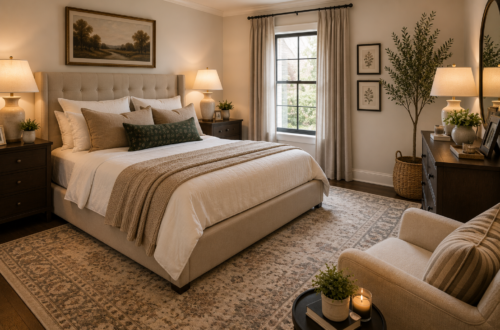
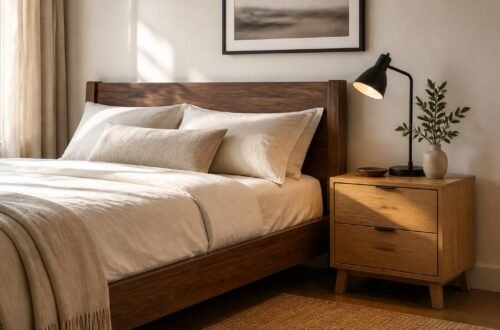
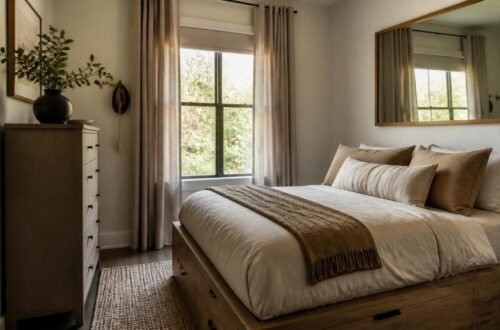
In the living room, focus on a mixed coffee table and sofa pairing plus layered textiles. In the bedroom, an antique-style headboard and a quilt go a long way. In the kitchen, open shelving with collected stoneware does more work than any single big purchase. You don’t need to overhaul every room at once — pick the one you spend the most time in and start there.
The Real Secret
This look isn’t about buying more. It’s about buying and keeping things with a little more personality than a matched set offers. Once you start noticing which pieces in your home have character and which ones are just filler, the whole process gets a lot easier — and a lot less expensive.