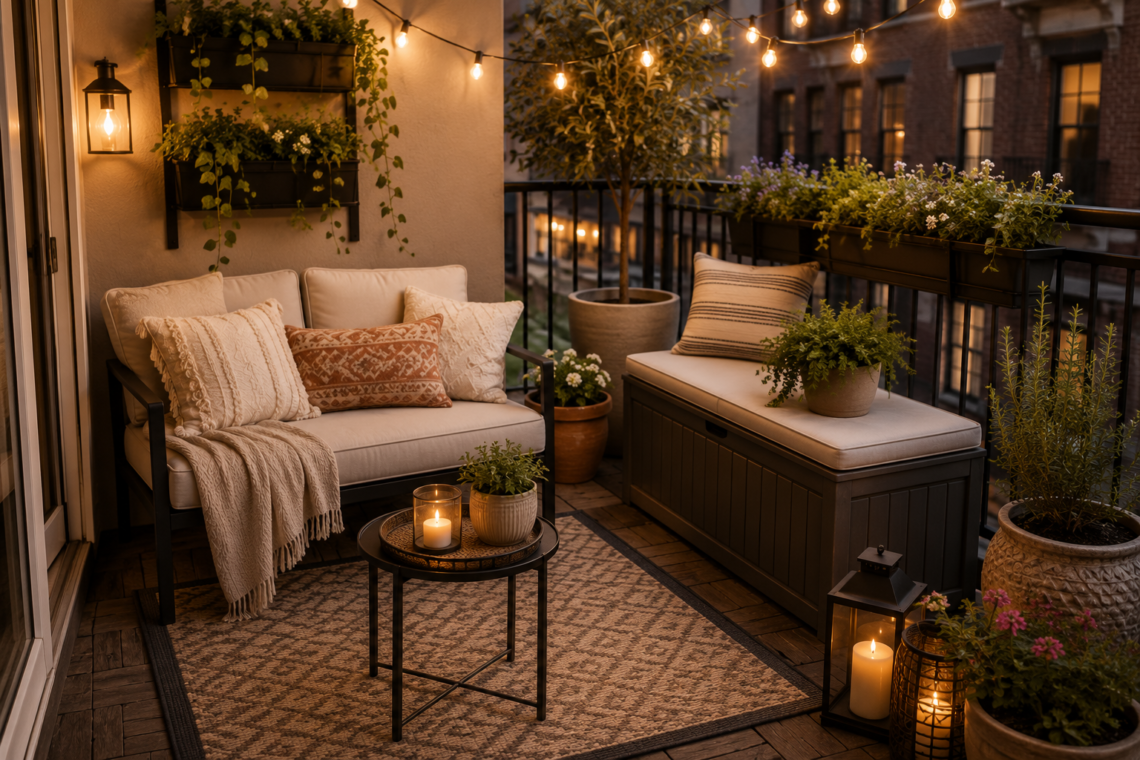
A small patio doesn’t need to feel small. What usually makes a compact outdoor space feel unfinished isn’t the square footage — it’s furniture that’s the wrong scale, no vertical layering, and nowhere to put things away when you’re not using them. Fix those three things and even a five-by-eight balcony can feel like a real room.
Furniture Scaled for the Space
The single biggest mistake on small patios is furniture built for a bigger room. A loveseat instead of a full sofa, a bistro set instead of a six-person dining table, and a low-profile side table instead of a bulky coffee table all leave room to actually move. Measure your space before buying anything, and leave at least two feet of walking clearance around every piece.
Go Vertical
When floor space is limited, the walls and railings become valuable real estate. Hanging planters, a vertical herb garden, or a wall-mounted shelf for small pots all add greenery and personality without eating into your seating area.
Closed Storage Solves the Clutter Problem
Cushions, string lights, citronella candles, extra throw blankets — small outdoor spaces fill up with loose items fast. A weatherproof storage bench or a slim deck box gives all of that a closed, out-of-sight home, and a storage bench does double duty as extra seating when you have guests over.
Layer in Lighting
String lights, a small solar lantern, or a battery-powered table lamp make a tiny patio feel finished after dark in a way that a single overhead fixture never will. Layering two or three light sources at different heights reads as intentional rather than an afterthought.
Rugs Define the Space
An outdoor rug does more work than people expect — it visually separates your patio from the surrounding concrete or grass and makes the whole area feel like a designed room rather than leftover space. Choose a weatherproof material sized to leave a small border of floor showing around the edges.
Privacy Without Losing Light
A slatted privacy screen, a tall potted plant, or an outdoor curtain panel can block a sightline from a neighbor without making the space feel boxed in. Keep privacy solutions on one side only if possible, so the space still feels open rather than enclosed.
Multifunctional Furniture Earns Its Keep
An ottoman that opens for storage, a side table with a lower shelf, or a bench with a lift-top seat all pull double duty in a space where every piece needs to work harder. Prioritize furniture that does two jobs over furniture that only does one.
Planters That Add Height, Not Just Color
A mix of planter heights — a tall floor planter, a mid-height rail planter, and a few small pots — creates layers the way furniture does indoors. Avoid lining up everything at the same height; it flattens the whole space visually.
What to Buy First
If you’re starting from nothing, prioritize in this order: a properly scaled seating piece, an outdoor rug to anchor the space, then lighting, then storage, then the smaller decorative layer of planters and textiles. Seating and the rug do the most to make the space feel like a room; everything else builds on top of that foundation.
Where to Spend vs. Where to Save
Spend on your seating — it needs to hold up to weather and daily use, and a well-made frame will outlast a budget version by years. Save on planters, string lights, and small decorative accessories, which are easy and inexpensive to swap out as your taste changes.
Finished, Not Furnished
A small patio feels finished when every piece is scaled correctly, storage is handled, and there’s at least one layer of lighting after dark. You don’t need more furniture to get there — you often need less, chosen more carefully.