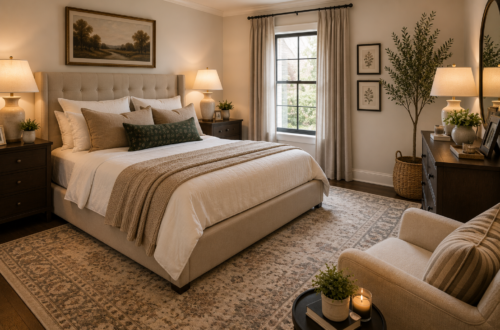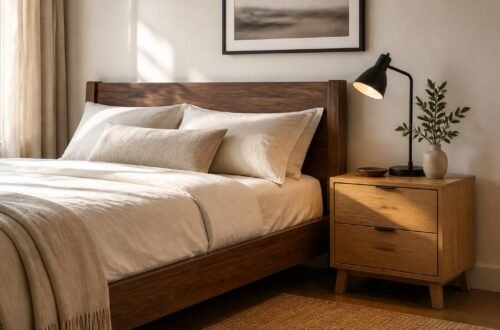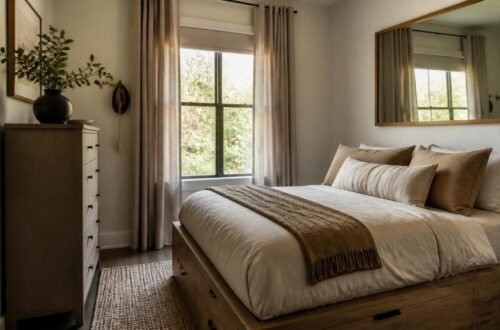
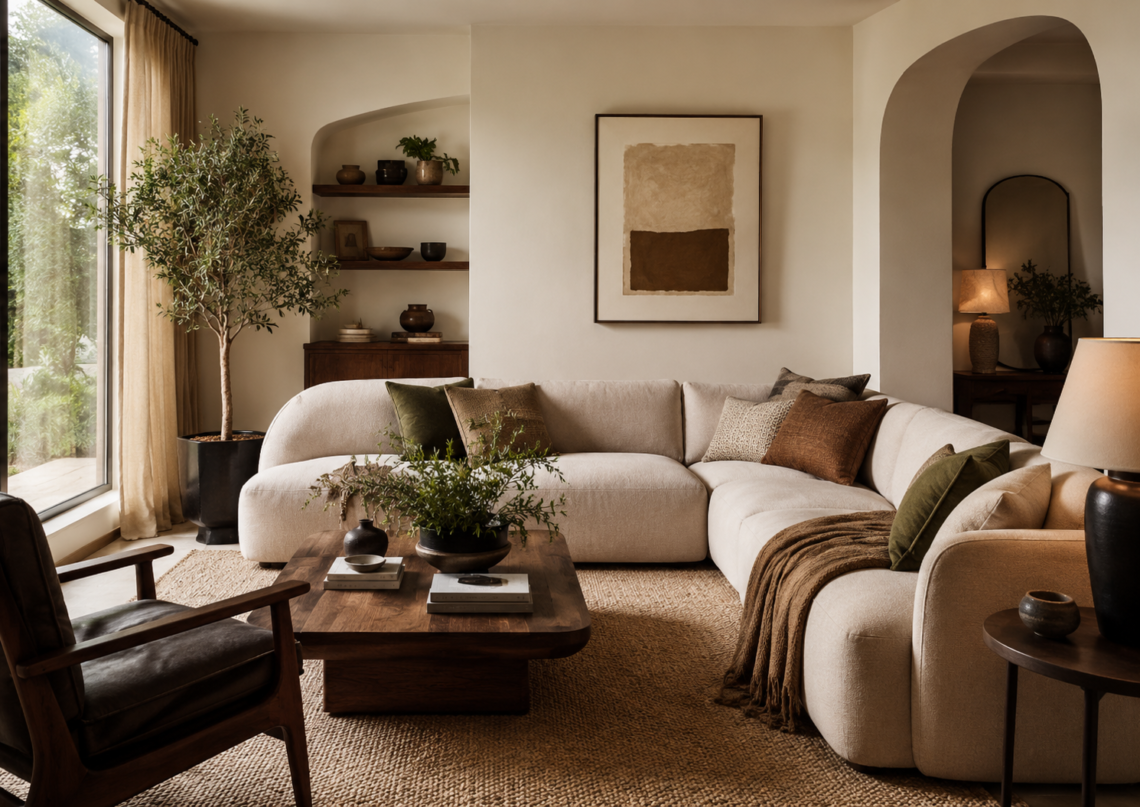
There is a particular kind of living room that makes people pause at the doorway—not because it is flashy, but because it feels calm, comfortable, and quietly luxurious.
That is the appeal of warm modern style.
It keeps the clean lines and uncluttered appearance of modern design, but replaces cold gray tones, sharp surfaces, and empty rooms with warm neutrals, natural wood, soft fabrics, and materials that invite you to sit down and stay awhile.
The best part is that this look does not require a designer-sized budget. A warm modern living room is created through deliberate choices: the right color temperature, balanced furniture, layered texture, thoughtful lighting, and restraint.
Warm Modern Style Versus Cold Minimalism
Minimalism is often associated with clean lines, open space, and a sense of calm, but when it is taken too far, a room can begin to feel cold, empty, or unfinished. Warm modern design keeps the simplicity and uncluttered beauty of minimalism, while making the space feel softer, more welcoming, and easier to live in.
Instead of relying on stark white walls, cool gray furniture, and hard reflective surfaces, warm modern rooms introduce cream, taupe, walnut, chocolate, olive, clay, and soft black. Curved furniture, comfortable upholstery, natural wood, woven fabrics, and personal details help the room feel polished without losing its warmth.
The result is a space that still feels orderly and intentional, but not overly perfect or untouchable. It looks refined, yet it also feels like a room where people can relax, gather, and stay awhile.
Begin With a Warm Neutral Color Palette
Cream, warm white, taupe, mushroom, camel, walnut, chocolate, muted olive, and soft black work beautifully in a warm modern living room.
A simple way to build the palette is to choose:
- One dominant neutral for the walls and largest furniture pieces
- One deeper tone to ground the room
- One subtle accent color used in smaller details
For example, cream walls and a warm beige sectional can be grounded with a walnut coffee table and soft black accents. Muted olive or rust can then appear in pillows, artwork, ceramics, or a single accent chair.
Warm modern rooms do not need to be entirely beige. They simply need colors with compatible undertones.
Choose the Sofa or Sectional First
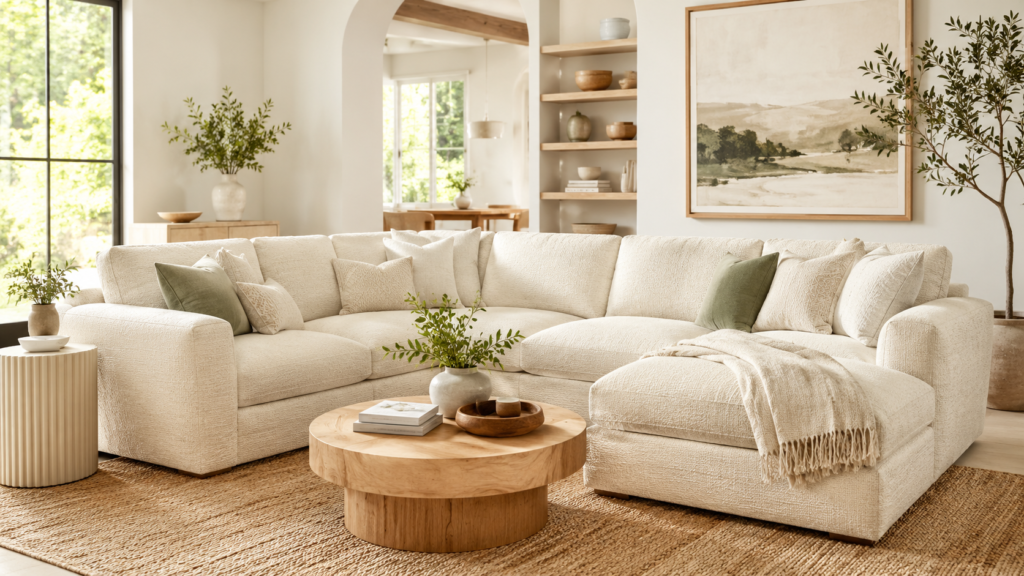
The sofa or sectional is often the piece that sets the tone for the entire living room, so it makes sense to begin there. Because it usually takes up the most visual space, its shape, color, and texture will influence nearly every other decision in the room — from the rug and coffee table to the lighting and accents you choose later.
In a warm modern living room, the best sofas tend to feel clean and refined without looking stiff. Look for softly curved lines, rounded arms, low profiles, and generous cushions that create a relaxed but polished feel. Upholstery also makes a difference. Textured fabrics such as linen blends, boucle, chenille, and softly woven performance fabrics help bring warmth and dimension into the space while keeping the look elevated and comfortable.
It also helps to think beyond color alone. A beautiful sofa should fit the scale of the room, feel good for everyday use, and support the overall atmosphere you want to create. Shades like cream, oatmeal, taupe, camel, and warm gray work especially well because they blend effortlessly with wood tones, layered neutrals, and natural textures. When the right sofa is in place, the rest of the room becomes much easier to style around it.
Use an Area Rug to Define the Seating Area
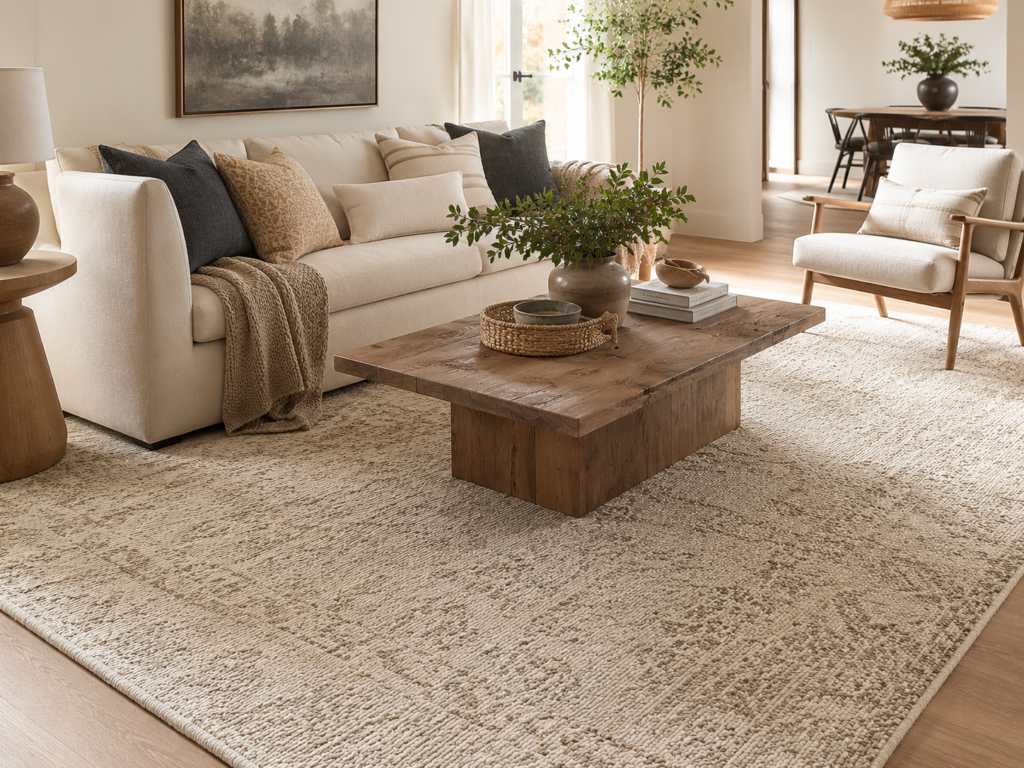
An area rug does more than add softness underfoot—it helps define the seating area and visually connect the furniture so the room feels intentional and complete. In a warm modern living room, choose a rug with subtle texture or a restrained pattern that supports the space without competing with the sofa, coffee table, or artwork. Wool, wool blends, jute blends, low-pile woven rugs, and softly distressed designs all work well because they add depth while keeping the overall look calm and polished.
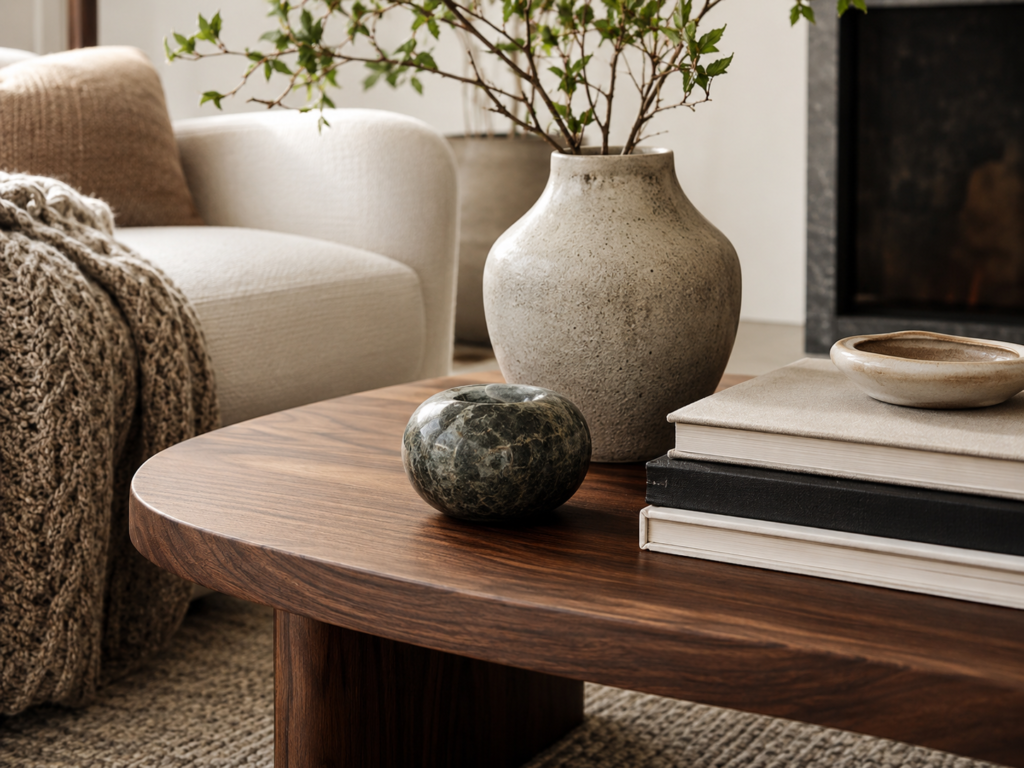
The size of the rug matters just as much as the style. Ideally, at least the front legs of the sofa and chairs should rest on it so the furniture feels grouped together rather than scattered across the room. A rug that is too small can make even beautiful furniture look disconnected. For the most cohesive result, choose tones that relate to the walls, upholstery, or wood finishes instead of creating a sharp contrast.
Layer the Lighting
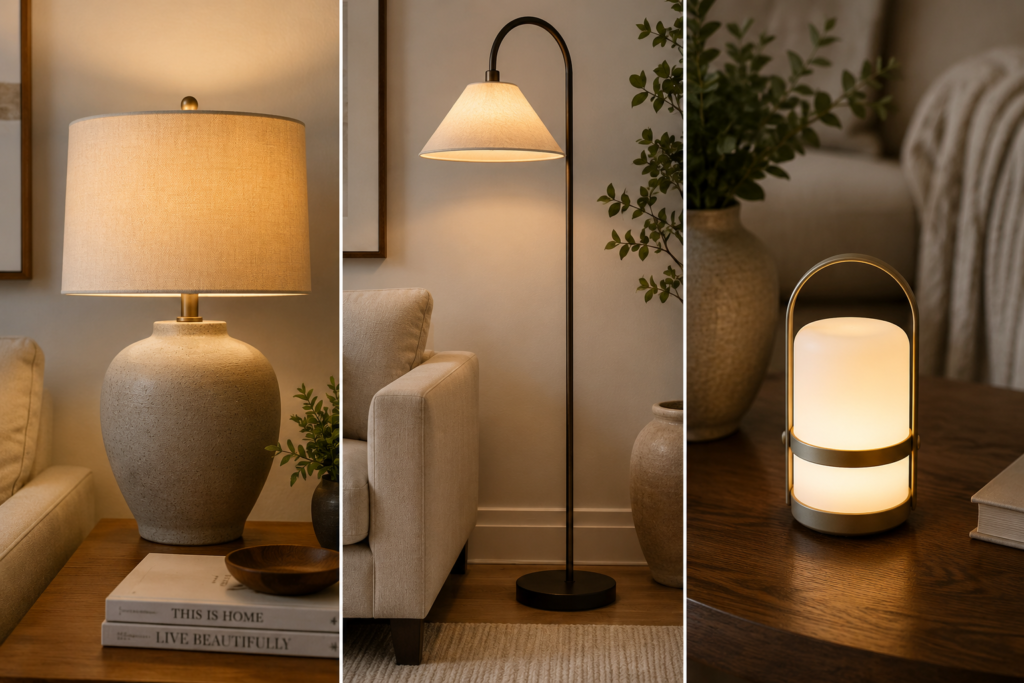
A single overhead fixture rarely creates a comfortable or polished atmosphere on its own.
Warm modern rooms benefit from several light sources positioned at different heights. This may include:
- A ceiling fixture or pendant for general light
- A floor lamp beside a sofa or reading chair
- A table lamp on a console or side table
- Wall sconces or picture lights for accent lighting
Bulbs with a warm appearance—typically around 2700K to 3000K—usually complement cream walls, wood furniture, and warm textiles better than cool white bulbs.
Dimmers are also valuable because they allow the room to shift from bright and practical during the day to soft and comfortable in the evening.
Mix Natural and Refined Materials
The pieces do not need to match perfectly. A warm modern room often feels more collected and intentional when the finishes coordinate without looking as though everything came from the same set.
For example, a walnut coffee table, an imperfect ceramic vase, a stone bowl, a woven throw, and a brushed brass lamp can create more depth and visual interest than a group of matching accessories. The key is repetition. When an important material or finish appears more than once in the room, the design feels connected rather than random.
Add Wall Art and Mirrors With Purpose
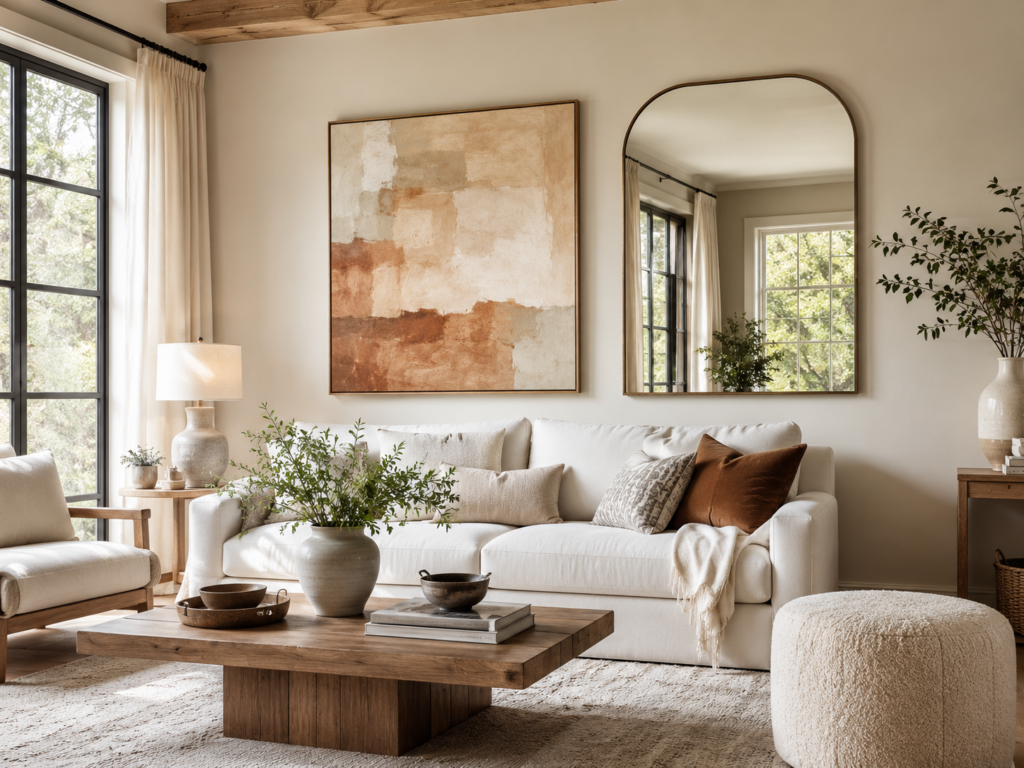
Large-scale artwork often works better in a warm modern room than several undersized pieces scattered across the walls.
Look for abstract art, organic shapes, textural canvases, landscapes, or warm-toned photography. The art should support the color palette without matching every color exactly.
Mirrors can also add light and make a smaller living room feel more open. Place a mirror where it can reflect a window, lamp, attractive piece of furniture, or another intentional part of the room.
Avoid hanging art or mirrors too high. They should feel connected to the furniture below them rather than floating near the ceiling.
Keep the Room Elegant Without Making It Feel Empty
Warm modern design is restrained, but restraint does not mean leaving every surface bare.
A room often needs one additional layer to feel finished:
- A stack of books on the coffee table
- A ceramic bowl or vase
- A plant in an empty corner
- A textured throw across the sofa
- Two or three carefully chosen pillows
- A tray on a console table
The goal is to create interest without crowding the room.
If every surface is empty, the room may feel unfinished. If every surface is full, the clean modern foundation disappears.
How to Get the Look
Creating a warm modern living room is less about filling the space and more about choosing a few elements that work together. Start with a calm, warm foundation, then layer in comfort, texture, and contrast so the room feels polished without becoming overly styled.
- Choose one warm neutral for the walls and main upholstery.
- Select a comfortable sofa or sectional with clean, softened lines.
- Add a large area rug that connects the main seating pieces.
- Layer at least three sources of light at different heights.
- Mix natural materials such as wood, ceramic, stone, metal, and woven fabric.
- Use one large piece of artwork or a well-placed mirror as a visual anchor.
- Finish with a small number of meaningful accessories instead of filling every open surface.
What to Avoid
Warm modern design can quickly lose its balance when the room becomes too cold, too sparse, or visually disconnected. A few common mistakes can make an otherwise beautiful space feel unfinished or less inviting.
- Avoid pairing stark white walls with several cool gray furniture pieces unless you add warmer wood tones, textiles, or lighting to balance them.
- Do not rely on one bright ceiling fixture to light the entire room.
- Avoid mixing too many unrelated metal finishes without repeating them intentionally.
- Do not use several undersized pieces of artwork where one properly scaled piece would create more impact.
- Avoid choosing an area rug that is too small for the seating arrangement.
- Do not remove so much décor that the room feels empty rather than thoughtfully minimal.
Bringing the Room Together
A warm modern living room succeeds because it does not force you to choose between sophistication and comfort.
With a cohesive neutral palette, comfortable furniture, natural materials, properly scaled pieces, and layered lighting, the room can feel polished enough for a design magazine while remaining practical for everyday life.
The most successful spaces are not the ones filled with the most expensive objects. They are the ones where color, scale, texture, light, and comfort work together—and where people genuinely want to sit down and stay.