In California, outdoor living is part of the lifestyle. A patio, balcony, or backyard seating area is not just extra square footage — it is an extension of the home. When styled well, it becomes a place to enjoy a quiet morning coffee, share dinner with family, or unwind outside at the end of the day.
The good news is that a comfortable outdoor space does not require a massive backyard or an extravagant budget. What matters most is treating the patio like a real room. That means choosing the right furniture for the size of the space, creating shade where needed, adding lighting for the evening, and layering in texture with rugs, cushions, and greenery.
Start With the Space You Actually Have
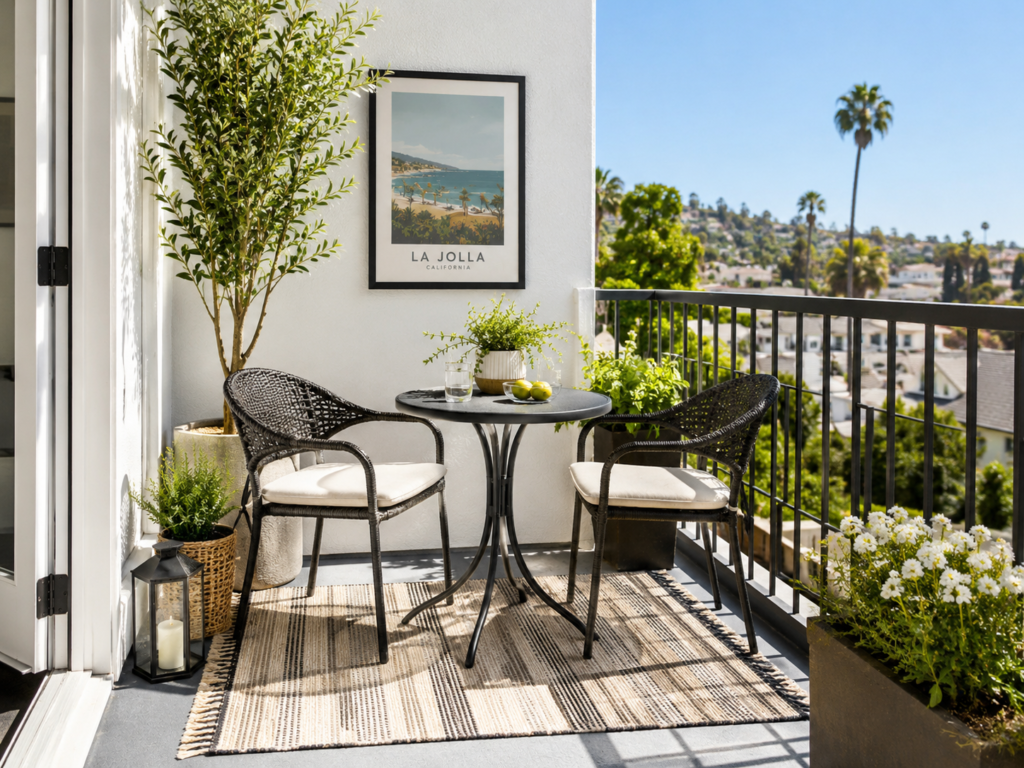
Before choosing furniture or decor, take a moment to evaluate the size and shape of the area. A narrow balcony has very different needs than a deep covered patio or a large backyard terrace. The goal is not to fill every inch, but to create a layout that feels balanced and usable.
Oversized furniture can make a small space feel crowded, while furniture that is too small can leave a larger patio feeling unfinished. It helps to decide early how you want to use the space. If the main purpose is relaxing, a pair of lounge chairs or a compact conversation set may work best. If meals are part of the plan, a dining set may make more sense.
Choose Between a Conversation Area and a Dining Area
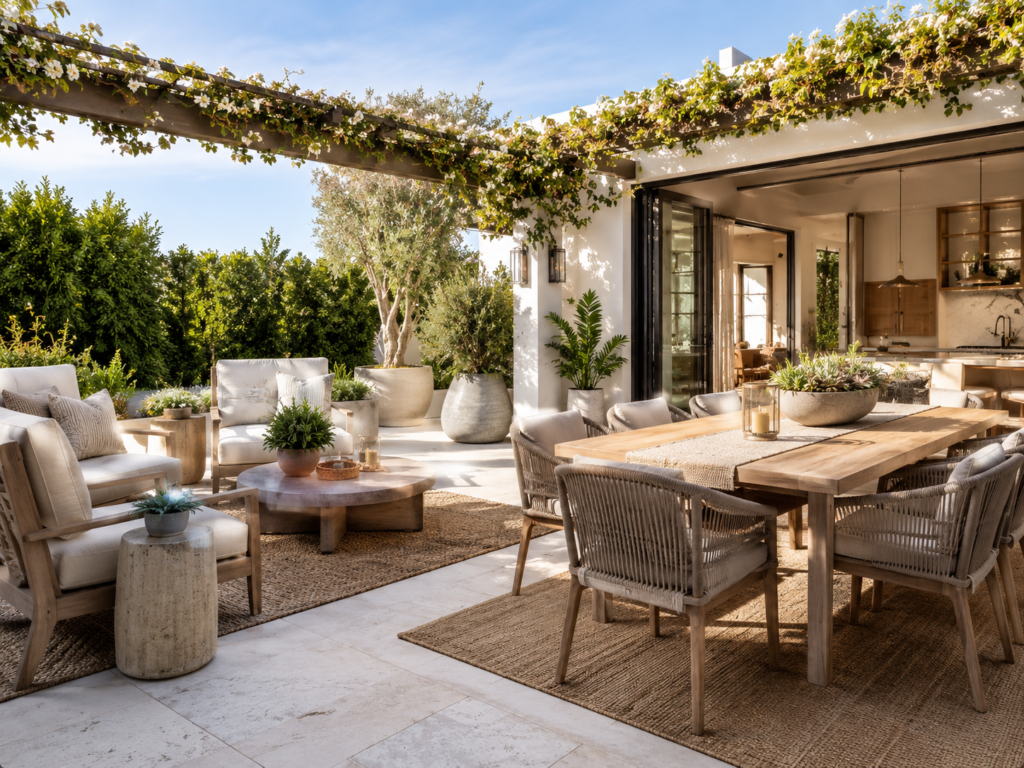
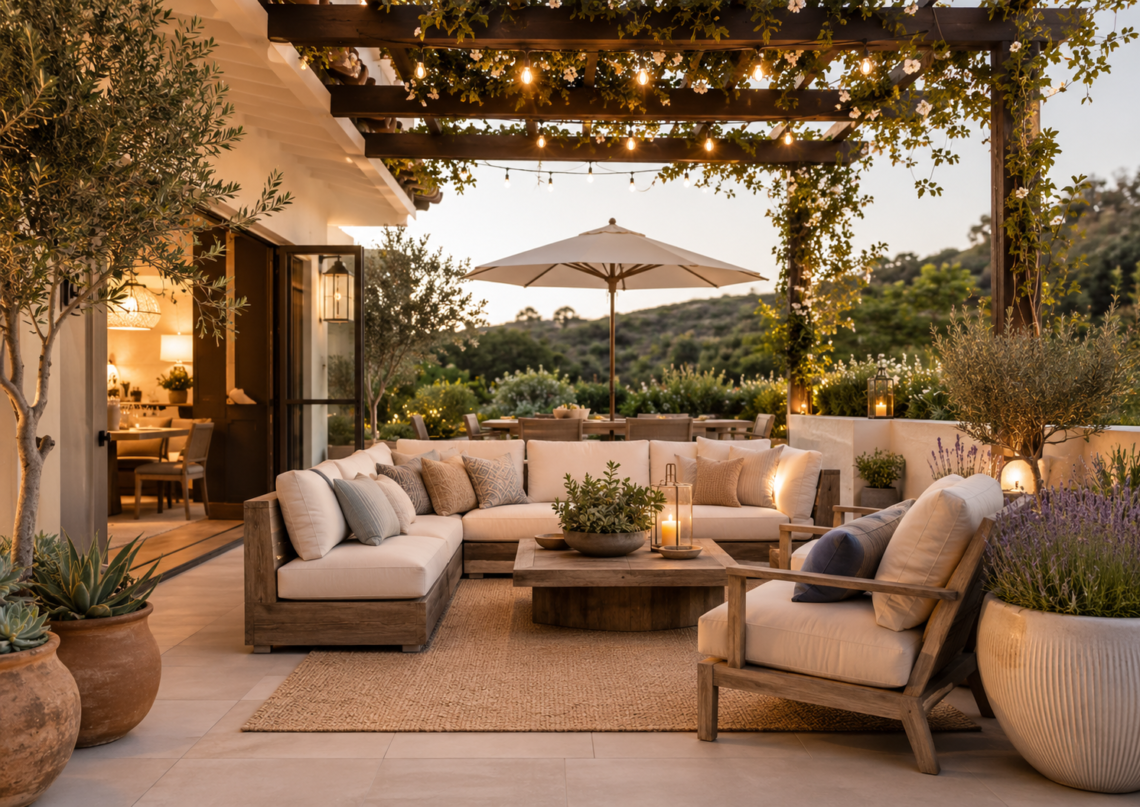
One of the most important decisions in patio design is whether the space should center around lounging or dining. A conversation set usually includes a sofa or cushioned chairs arranged around a coffee table, making it ideal for relaxing or entertaining in the evening. A dining set is better suited for meals, casual gatherings, or family use.
In larger patios, combining both can create a more complete outdoor living experience. In smaller patios, it is usually better to commit to one main function so the space feels intentional rather than crowded.
Add Shade to Make the Patio More Usable
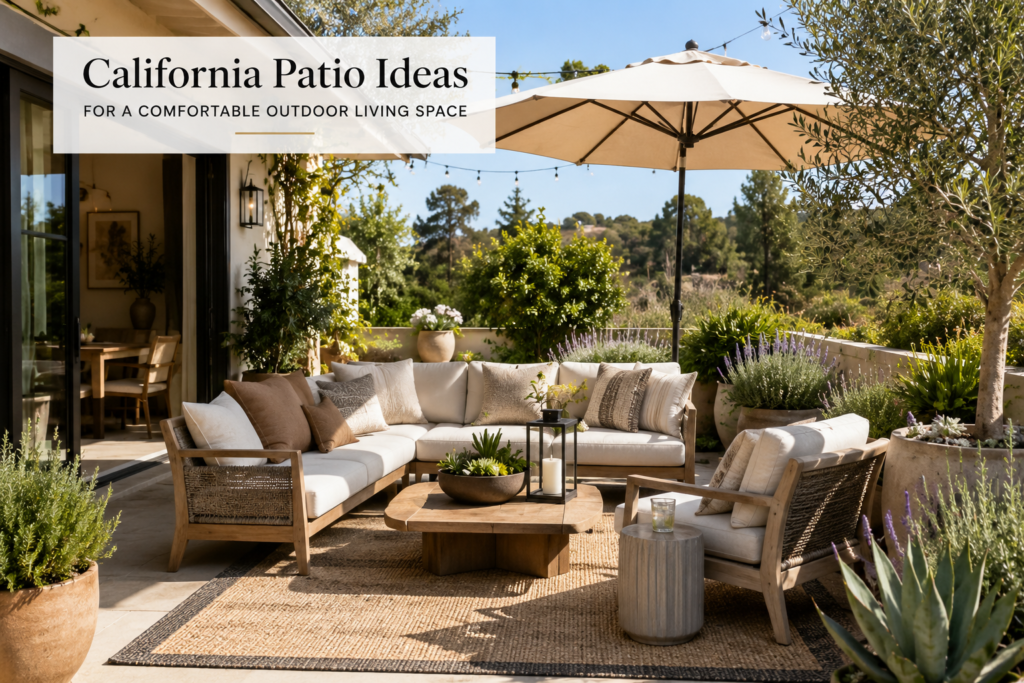
California sun can be beautiful, but it can also make an outdoor area difficult to use during the warmer parts of the day. Shade is one of the elements that most directly affects comfort. Even the most attractive patio will go unused if the sun makes it uncomfortable to sit outside.
A patio umbrella is often the easiest solution, while pergolas, retractable awnings, and shade sails can provide broader coverage. The best option depends on the space, but the goal remains the same: create enough protection so the patio feels inviting during the day, not just after sunset.
Use an Outdoor Rug to Define the Seating Area
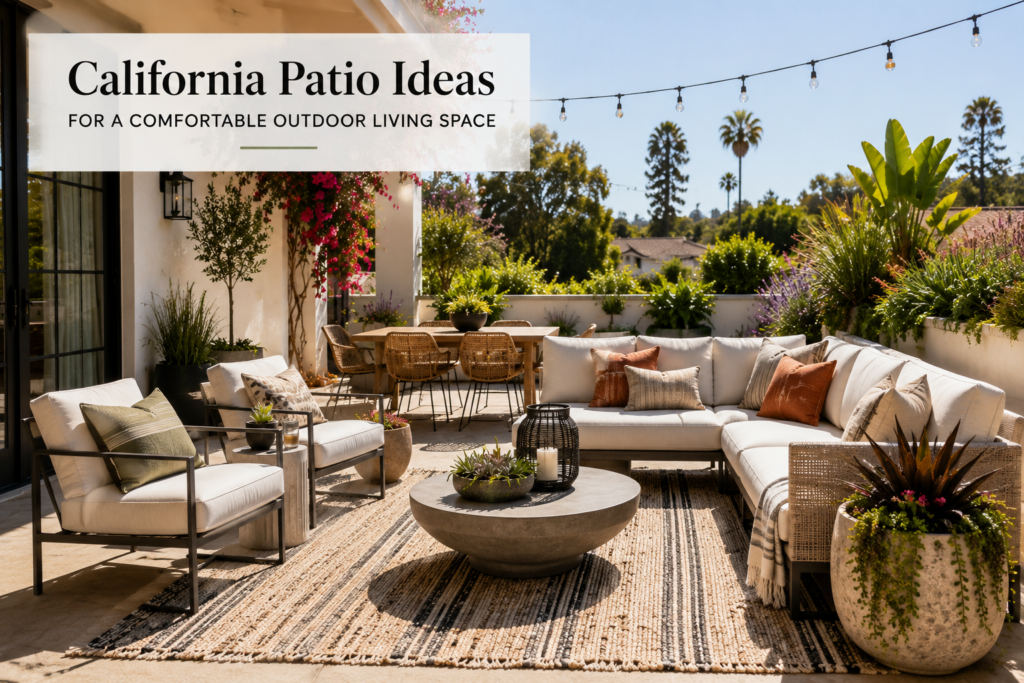
An outdoor rug helps a patio feel grounded and complete. Just as a rug indoors helps define a living room, an outdoor rug visually anchors the furniture and makes the seating area feel more finished. It also softens surfaces like concrete, tile, or pavers, making the space feel warmer and more styled.
Look for weather-resistant materials such as polypropylene or other performance fibers designed for outdoor use. Neutral tones, subtle stripes, or understated patterns tend to work especially well because they add texture without competing with the furniture.
Layer the Lighting for Evening Comfort
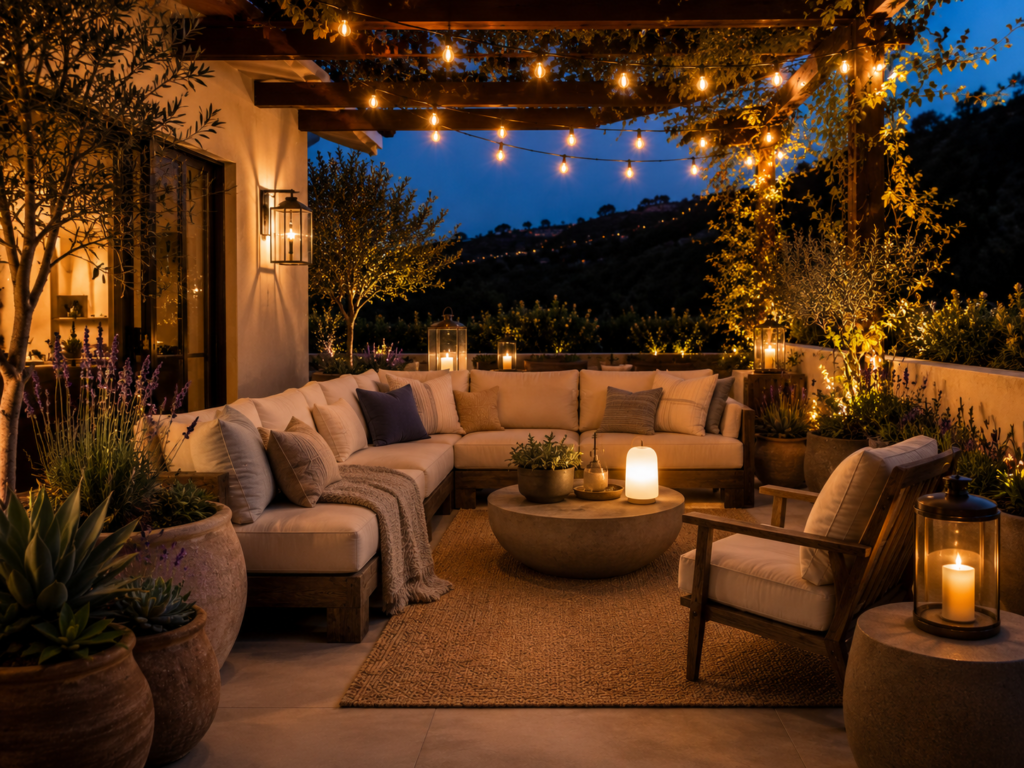
Good lighting is one of the details that transforms a patio from a daytime area into a true evening retreat. Rather than relying on one source of light, layer multiple types of lighting at different heights to create a warmer and more inviting atmosphere.
String lights overhead can add a soft glow, lanterns can warm up a table or corner, and rechargeable lamps can add practical light exactly where it is needed. This layered approach makes the patio feel more relaxed and intentionally styled after dark.
Use Planters and Drought-Conscious Greenery
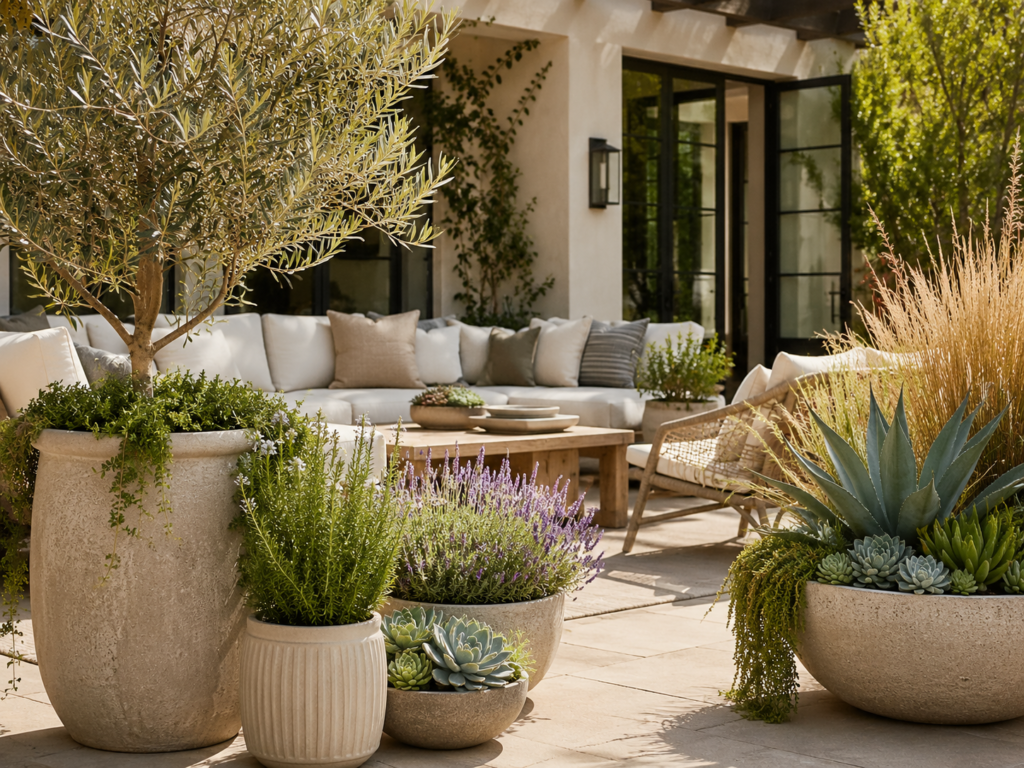
Plants are one of the easiest ways to soften an outdoor space, but in California it makes sense to choose greenery that works with the climate. Drought-conscious plants such as succulents, lavender, olive trees, rosemary, and ornamental grasses can bring texture and life to a patio without requiring constant watering.
Instead of lining planters up evenly, group them in varied heights and sizes for a more natural, layered look. A tall planter can define a corner, while smaller planters can add life to a table or entry point. Even a simple grouping of well-chosen plants can make a patio feel more established.
Create Privacy Without Closing the Space In
Not every patio or balcony offers natural privacy, especially in apartments, townhomes, or smaller California yards. The key is to create a sense of separation without making the space feel boxed in.
Privacy screens, outdoor curtains, tall potted plants, or woven fence panels can all help define the space while keeping it light and breathable. In many cases, a single screen placed behind a seating area is enough to make the patio feel noticeably more comfortable and secluded.
Choose Outdoor Fabrics That Can Handle Real Life
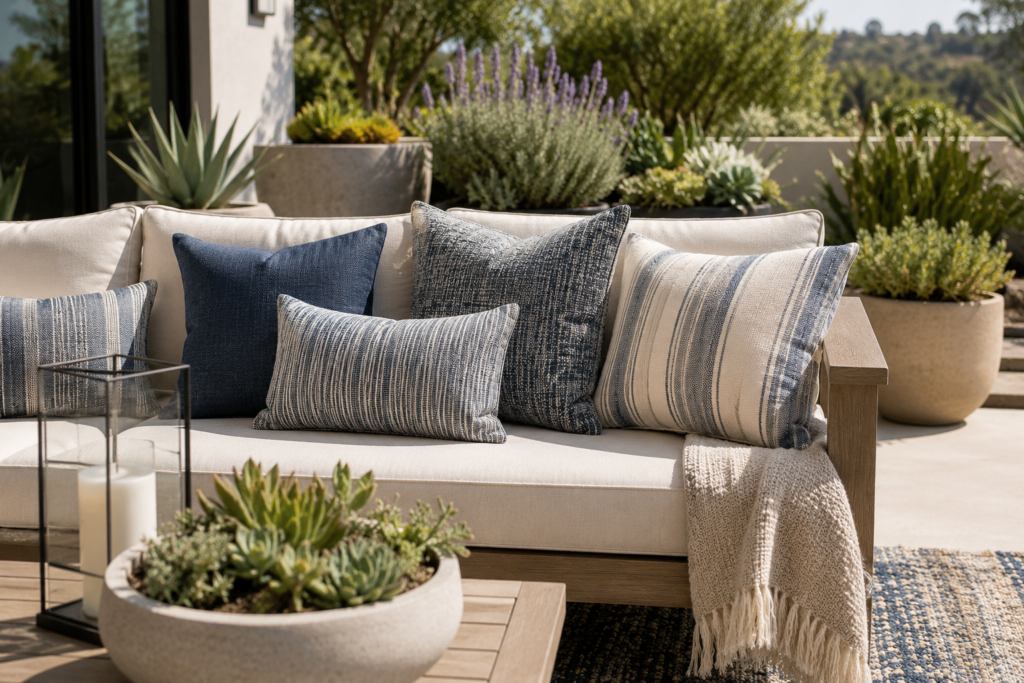
Outdoor cushions and soft furnishings need to do more than look good. They need to withstand sun exposure, occasional moisture, and everyday use. Fabrics designed for outdoor performance, such as solution-dyed acrylic, resist fading better than standard indoor textiles and are much easier to clean.
The best outdoor spaces feel comfortable enough to linger in, and that usually comes down to the softness and durability of the seating. Good cushions, a few outdoor pillows, and one or two washable throws can make the space feel as inviting as an interior room.
Make the Patio Feel Comfortable in the Evening
A patio feels most memorable when it invites people to stay longer than they planned. That usually comes from a combination of comfortable seating, warm lighting, soft texture underfoot, and a sense of calm. A rug, a few cushions, and a gentle evening glow go much further than a collection of random accessories.
If space allows, a small fire feature or a cluster of candles can make the area feel even more welcoming at night. The goal is not to overcrowd the patio, but to create enough warmth and atmosphere that it feels like a destination.
Small Patio and Balcony Ideas That Still Feel Finished
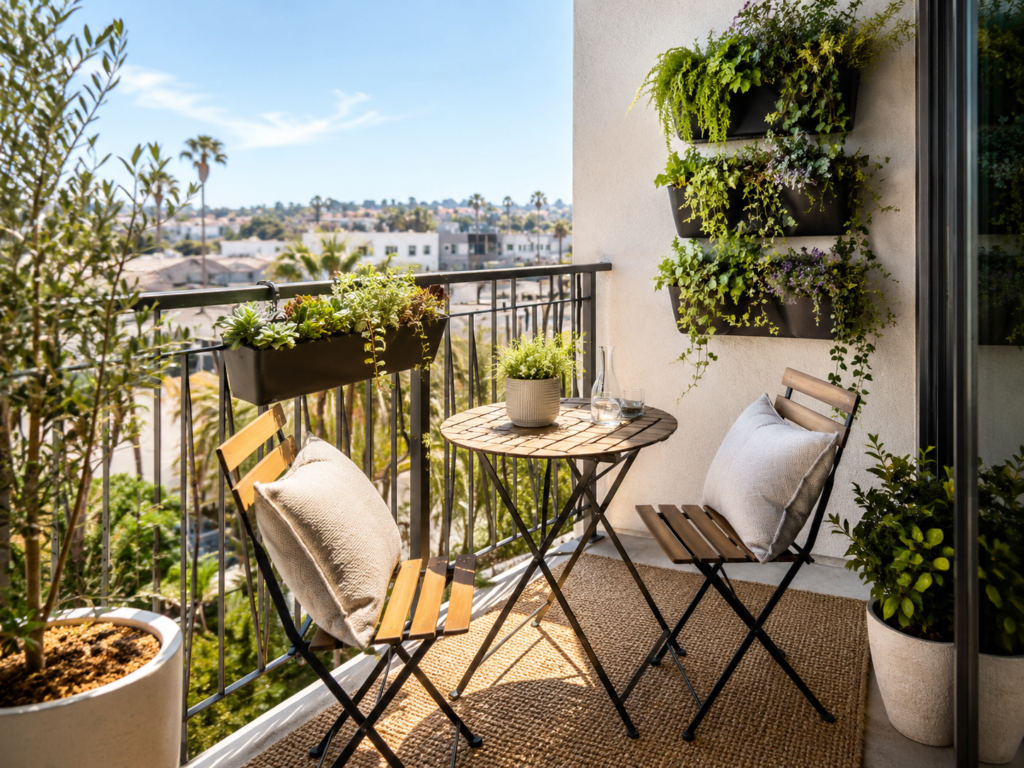
A smaller space can still feel polished and useful with the right choices. Foldable or stackable furniture is especially helpful for balconies, since it allows flexibility without taking up permanent floor space. Vertical planters, wall-mounted shelves, and narrow side tables also help maximize function without adding bulk.
Even a small balcony can feel styled when it includes a compact seating area, one outdoor rug, one strong lighting element, and a few well-placed plants. The size of the patio matters less than how intentionally it is put together.
How to Make an Outdoor Space Feel Finished
A finished outdoor space usually comes down to consistency. One furniture finish, one rug, one clear purpose, and one or two layers of lighting can make a patio feel far more complete than a mix of unrelated pieces. When every item supports the same overall look, the patio feels more designed and less temporary.
This does not mean everything has to match. It simply means the patio should feel coordinated. Repeating a finish, a color family, or a material helps tie the space together and creates a more inviting result.
Bringing It All Together
California patio design works best when it balances style and comfort. With the right furniture, a practical shade solution, layered lighting, a durable rug, and a few well-chosen plants, an outdoor space can feel just as finished as any room inside the home.
Whether you are styling a small apartment balcony or a larger backyard patio, the goal is the same: create a space that feels livable, relaxed, and worth spending time in. When an outdoor area is treated with the same care as the interior, it becomes one of the most enjoyable parts of the home.