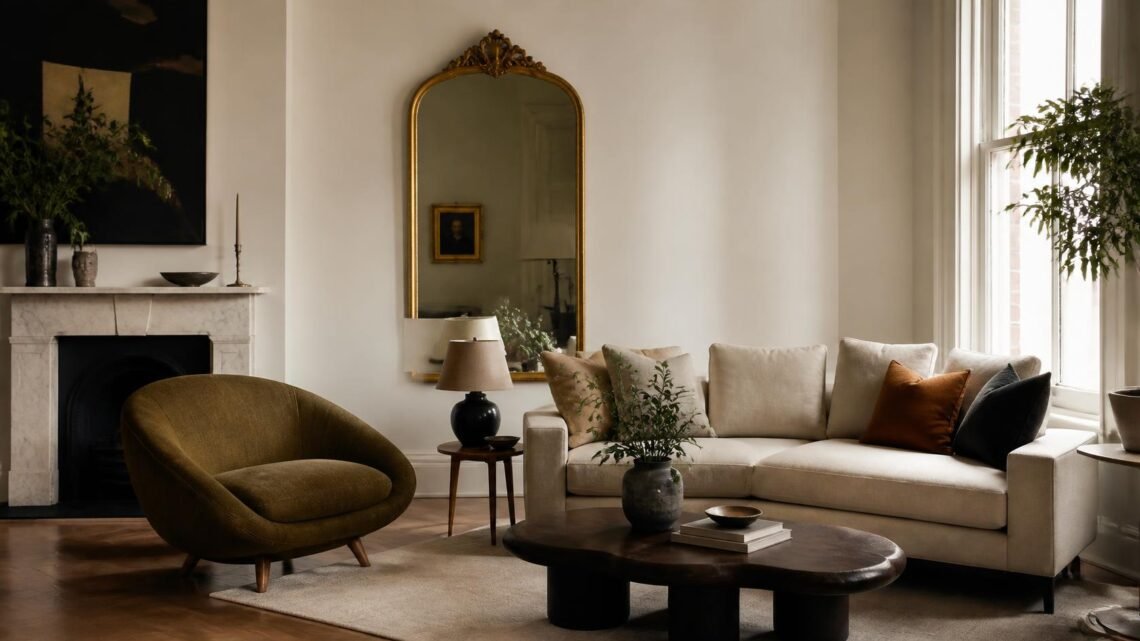
Vintage character is one of the hardest things to fake and one of the easiest things to overdo. Go too far and a modern home starts to feel like a museum exhibit. Go too subtle and the effort barely registers. The sweet spot is mixing eras deliberately — letting a few older or older-inspired pieces sit inside a mostly current home.
Mix Furniture Eras Instead of Committing to One
A single antique or vintage-style piece inside an otherwise modern room reads as curated. An entire room of vintage furniture reads as a period set. Pick one or two pieces per room — a dresser, a mirror, a chair — and let the rest of the furniture stay current.
Silhouette Over Distressing
You don’t need visibly worn or distressed finishes to communicate vintage character. Curved legs, fluted detailing, and rounded silhouettes carry the feeling just as effectively, often in a way that looks more intentional than artificially aged furniture.
Art Sets the Era Faster Than Furniture Does
A single vintage-style botanical print, an antique-framed mirror, or an old-world-style oil painting can shift a room’s mood more efficiently than a piece of furniture. Art is also one of the easiest and least expensive ways to test how much vintage character you actually want in a space.
Lighting Fixtures With Real Character
A vintage-inspired chandelier, a brass sconce, or an old-style glass pendant does a lot of quiet work. Because lighting sits above eye level, it can carry more visual weight and detail than furniture without overwhelming the room.
Mirrors as the Easiest Entry Point
An arched, scalloped, or ornately framed mirror is one of the lowest-commitment ways to add vintage character to any room. It doesn’t require rethinking your furniture layout, and it can be swapped out easily if your taste shifts.
Hardware Changes More Than People Expect
Swapping plain modern pulls for aged brass, glass, or ceramic knobs on an otherwise contemporary dresser or cabinet can shift the entire feeling of a piece for very little cost. This is one of the highest-value, lowest-cost updates available.
Textiles That Carry Age Well
Linen, velvet, and lightly faded or textured fabrics read as vintage-adjacent more than crisp, glossy, or synthetic materials. A single vintage-style rug in a room of modern furniture can do a surprising amount of work.
Where Not to Mix Eras
Avoid mixing too many competing vintage styles at once — a Victorian-inspired mirror next to a mid-century credenza next to a French country chair will read as chaotic rather than collected. Choose a general era or mood and let your vintage pieces stay loosely within it.
What to Buy First
Start with the lowest-commitment pieces — a mirror, a lamp, or artwork — before investing in vintage or vintage-style furniture. This lets you test how much character you actually want to live with before making a bigger purchase.
Where to Spend vs. Where to Save
Spend on furniture with real vintage character, since a genuinely well-made older piece often holds up better than a new one trying to imitate it. Save on the smaller layer — art, hardware, textiles — which are easy and inexpensive to adjust as your taste evolves.
A Home That Feels Layered, Not Staged
The goal isn’t to make a modern home look old. It’s to make it feel like it has a history, even a borrowed one. A few well-chosen pieces, mixed deliberately rather than matched, will always read as more sophisticated than a room trying to commit fully to one era.