A dorm room is a strange design challenge — a small, shared, often oddly-shaped space that still needs to function as a bedroom, a study, a closet, and sometimes a living room, all at once. Making it feel like home isn’t about buying more. It’s about buying the right handful of things, sized correctly for a space you likely can’t reconfigure or paint.
Know Your Actual Dimensions Before Buying Anything
Most dorm beds run a Twin XL, five inches longer than a standard twin. Measure your bed frame, desk footprint, and closet before ordering anything — dorm rooms rarely have room to correct a sizing mistake.
The Mattress Matters More Than You Think
Dorm-issued mattresses are notoriously thin and firm. A quality mattress topper — memory foam or a supportive hybrid pad — is one of the highest-impact, lowest-cost upgrades you can make, since this is the piece you’ll use the most hours of the day.
Bedding That Does Double Duty
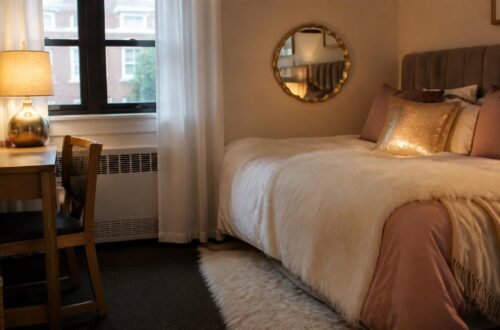
Twin XL sheets, a supportive pillow, and a duvet or comforter in a durable fabric handle both comfort and the visual anchor of the room. Since the bed usually takes up the largest visual footprint, it’s worth choosing bedding you actually like rather than whatever’s cheapest.
Storage Is the Real Priority
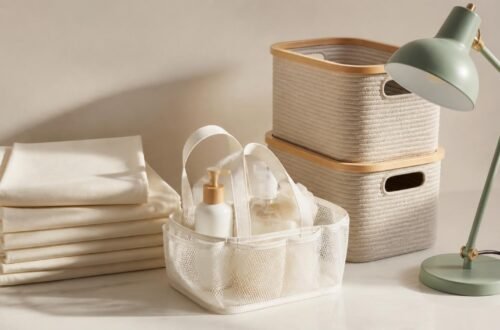
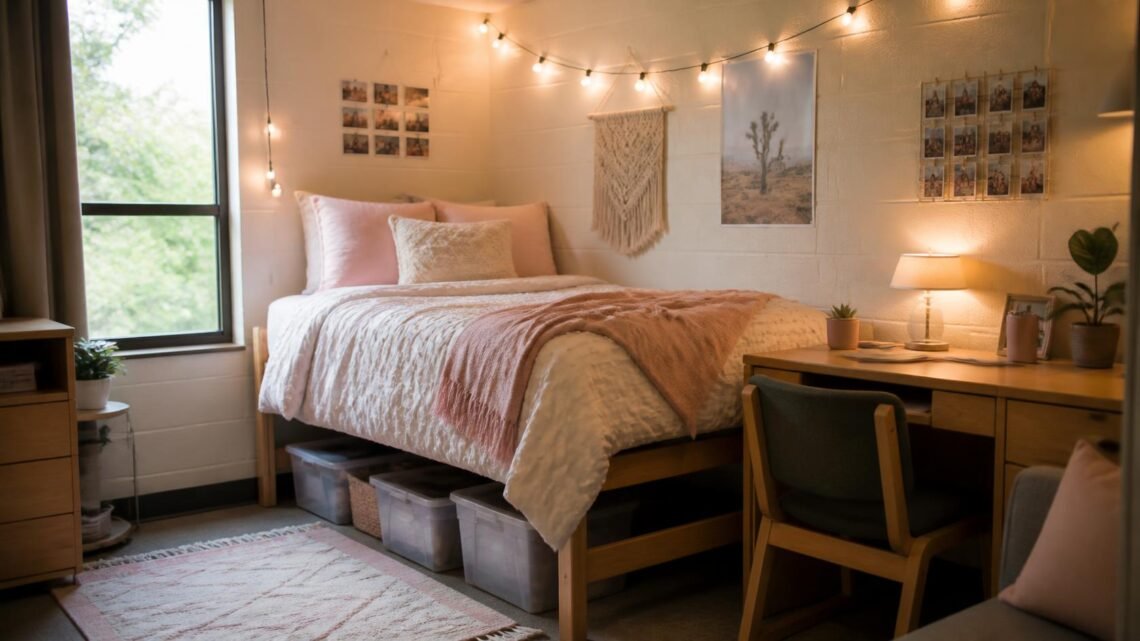
Closed storage — under-bed bins, a slim closed cabinet, or a storage ottoman — matters more in a dorm than almost anywhere else, because there’s rarely a door to close on mess. Under-bed storage in particular takes advantage of space that would otherwise go unused entirely.
A Desk Setup That Actually Gets Used
A desk lamp, a small organizer, and a comfortable chair make the difference between a desk that gets used daily and one that becomes a clothes pile by week three. If the provided desk chair is uncomfortable, a seat cushion is a small, inexpensive fix.
Personal Touches That Don’t Require Nails or Paint
Command strips, a tapestry, string lights, and a few framed photos or prints can transform a bare cinderblock wall without violating most housing agreements. This is where the room actually starts to feel like yours.
Rugs and Soft Layers
A small area rug softens hard dorm flooring and adds warmth underfoot. It also helps define your side of the room if you’re sharing, giving the space a sense of structure even without walls to divide it.
What to Buy First
Priority order for a dorm setup: mattress topper, bedding, storage (under-bed bins first), a desk lamp, then the decorative layer of rugs, wall decor, and lighting. Comfort and storage solve daily friction; decor is what makes it feel like home once the basics are handled.
Where to Spend vs. Where to Save
Spend on the mattress topper and bedding — you’ll use both every single day and they’re difficult to upgrade later once the semester is underway. Save on decorative items like string lights, posters, and small storage bins, which are inexpensive and easy to replace or take home at the end of the year.
Making a Small, Temporary Space Feel Permanent
The rooms that feel most like home aren’t the most decorated ones — they’re the ones where the basics (a comfortable bed, organized storage, decent lighting) are handled first, with personality layered in after. Get the fundamentals right, and the room does the rest of the work on its own.