A kitchen island does more than add another work surface. When chosen well, it can make the entire room feel more organized, inviting, and thoughtfully designed.
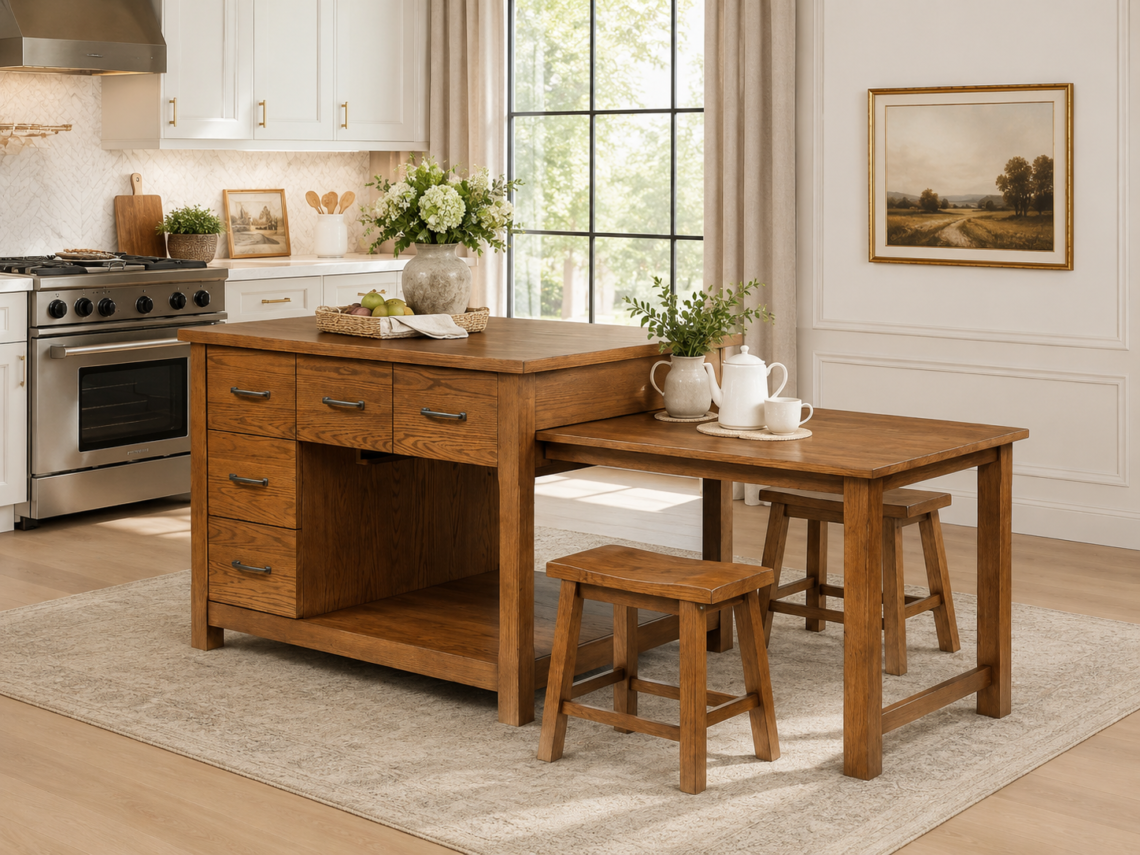
The Mayfair kitchen island is a beautiful example of furniture that combines practical function with warm, collected style. Its rich wood finish adds depth to a bright kitchen, while the attached table and matching stools create a comfortable place for everyday moments.
It is the kind of piece that can become the natural center of the room.
A Warmer Alternative to a Built-In Island
Not every kitchen needs a large permanent island. A freestanding design can add much of the same function without making the room feel overly constructed or crowded.
The warm oak tones work especially well against white or cream cabinetry because they introduce contrast without making the space feel dark. The visible wood grain also brings softness and character to kitchens filled with smooth painted surfaces, stone, and stainless steel.
Black or aged-metal hardware gives the piece definition and helps connect it to darker accents elsewhere in the room, such as window frames, lighting, cabinet pulls, or appliances.
Storage That Keeps the Kitchen Visually Calm
One of the easiest ways to make a kitchen look more polished is to reduce what is left sitting on the counters.
The island’s generous drawer storage provides space for utensils, linens, serving pieces, baking tools, and the smaller items that often make a kitchen feel cluttered. The open lower section can be styled with woven baskets, pottery, cookbooks, or neatly stacked cookware.
For a cleaner look, use matching baskets in natural materials. They will soften the heavier wood finish while keeping everyday items easy to reach.
A Pull-Out Table for Everyday Living
The attached extension table gives the piece more flexibility than a traditional island.
It can serve as a breakfast table in the morning, a homework station in the afternoon, or an informal place for coffee and conversation. When additional surface space is needed, it can also become part of the kitchen’s prep area.
The matching stools keep the design coordinated and can be tucked beneath the table when they are not being used. This makes the set especially useful in kitchens where floor space needs to remain open and uncluttered.
How to Style the Island
Because the island already has a strong wood presence, the styling should remain simple and light.
A large ceramic vase filled with green branches or soft white flowers adds height without creating visual clutter. A shallow woven tray can hold fruit, folded linen napkins, or a few everyday serving pieces.
Cream pottery, clear glass, pale stone, and natural textiles will brighten the dark oak finish. A soft neutral rug beneath the table area can help define the space and make the furniture feel more connected to the rest of the kitchen.
Avoid covering the entire surface with décor. Leaving open space allows the wood grain and thoughtful construction to remain part of the design.
The Design Takeaway
The most successful kitchens are not only beautiful—they make everyday life easier.
A freestanding island with storage, seating, and an expandable table can transform an unused area into a practical gathering space. Paired with light cabinetry, natural textures, understated accessories, and plenty of greenery, the result feels warm, intentional, and timeless.
It is proof that one well-chosen piece of furniture can change not only how a kitchen looks, but how the room is used.