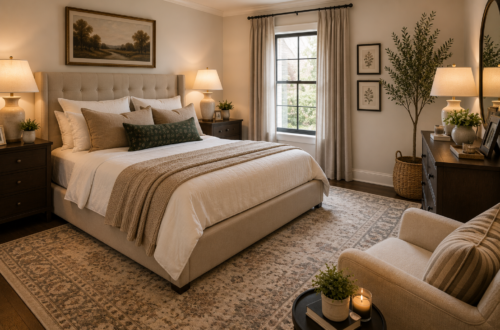
Mixing wood tones has a reputation for being risky, and the fear usually comes from one bad experience — a room where the woods clashed instead of complementing each other. But matching every piece of furniture to the same exact wood tone isn’t actually necessary, and it often makes a room look more like a matched showroom set than a home that evolved naturally.
Yes, You Can Mix Wood Tones
The key isn’t matching wood tones exactly — it’s matching their undertones. Warm woods (cherry, honey oak, mahogany) generally pair well with other warm woods, while cool woods (ash, gray-washed oak, walnut with cooler undertones) pair well with each other. Mixing across undertones, rather than across just color depth, is where most clashing actually happens.
The 60-30-10 Rule for Wood Tones
Borrowed from general design principles, this means choosing one dominant wood tone for roughly 60% of your furniture, a secondary tone for about 30%, and a contrasting accent tone for the remaining 10%. This ratio keeps a room from feeling either too matched or too chaotic.
Let Undertone Guide the Pairing
Hold two wood samples or pieces next to each other in natural light. If they share a similar warmth or coolness, even at different depths, they’ll almost always look intentional together. If one leans distinctly orange and the other distinctly gray, that’s usually the pairing to avoid.
Use a Neutral to Bridge Two Tones
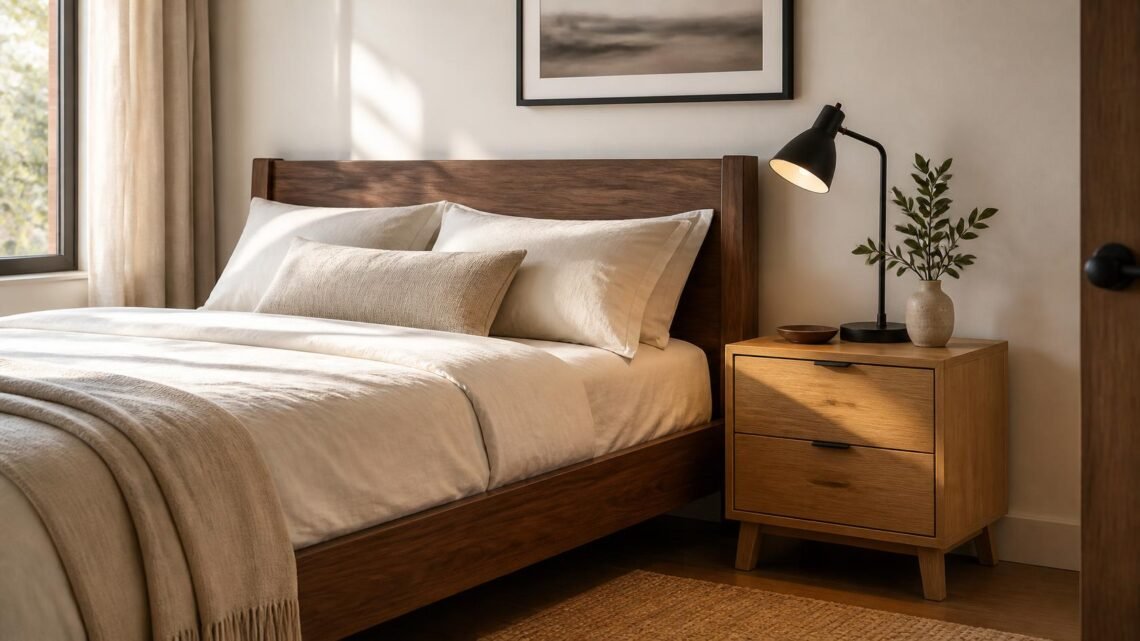
A black, white, or metal piece placed between two different wood tones — a black metal lamp between a walnut dresser and an oak nightstand, for instance — gives the eye a visual pause and makes the transition between tones feel deliberate rather than accidental.
Where Mixing Works Best
Bedrooms and living rooms tolerate wood-tone mixing well, since furniture pieces are naturally spread out and viewed somewhat independently. Tighter groupings — like a dining set — benefit from staying closer in tone, since those pieces are viewed together as a single unit.
Flooring Counts as a Wood Tone Too
Don’t forget your floor when planning this. If you have warm hardwood floors, leaning your furniture warm overall, even while mixing a few tones within that range, will feel more cohesive than introducing a strongly cool-toned piece that fights the floor.
Metal and Upholstered Pieces Provide Breathing Room
Not every piece in a room needs to be wood. Upholstered seating, a metal-framed table, or a glass-top surface gives your eye a rest between wood tones and makes mixing feel more intentional rather than crowded.
A Simple Test Before Committing
Before buying a new piece in a different wood tone, bring a photo of your existing furniture with you, or better, a small sample swatch. Comparing in person, in your actual lighting, catches undertone mismatches that are easy to miss from memory alone.
What to Buy First
Establish your dominant wood tone with your largest piece of furniture first — a bed frame, sofa table, or dining table — then choose secondary and accent pieces in complementary undertones once that anchor is set.
Where to Spend vs. Where to Save
Spend on your dominant, largest furniture piece, since it sets the tone for everything else in the room. Save on your accent pieces — a side table, a small shelf — which carry less visual weight and are easier to swap if the mix doesn’t work as expected.
Intentional Over Matched
A room with thoughtfully mixed wood tones looks more collected and more personal than one where every piece came from the same matching set. Match undertones, not exact shades, and the mixing will read as a choice rather than a mistake.